The 2026 Hotel Labor Crisis: Why Boutique Hotels Must Automate to Survive
The hospitality industry is bleeding talent, and the math is impossible to ignore. Learn why smart automation is the only way forward for boutique hotels.
The hospitality industry is bleeding talent, and the math is impossible to ignore. Despite rising wages and enhanced benefits, the workforce has not returned to pre-2020 levels. As we move deeper into 2026, the data paints a stark picture: 65% of surveyed hotels report active staffing shortages, with 71% stating they have open positions they simply cannot fill despite active and continuous recruitment.
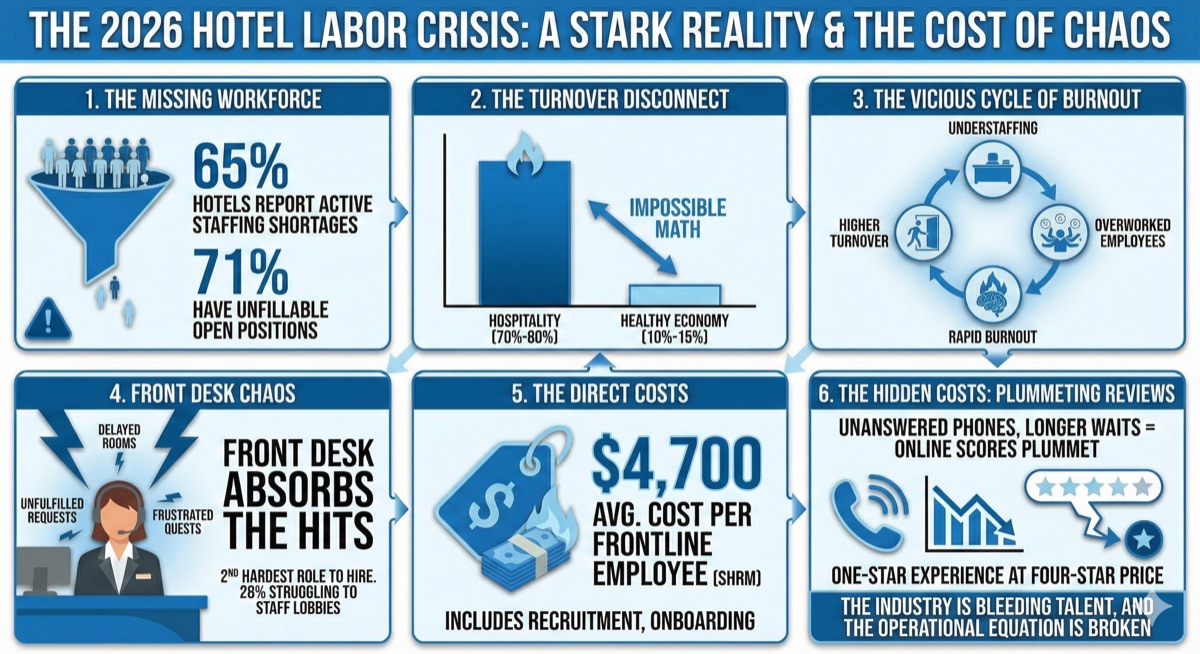
While travel demand remains strong, the workers required to service that demand are gone. The annualized turnover rate in the U.S. leisure and hospitality sector consistently hovers between 70% and 80%, making it the highest turnover rate of any major employment sector in the country. For context, a healthy turnover rate across the broader economy is generally considered to be 10% to 15%.
Operators are stuck in a vicious, expensive cycle: chronic understaffing leads to overworked employees, which causes rapid burnout, leading directly to higher turnover.
The Cost of Front Desk Chaos
When a hotel operates with a lean team, the front desk absorbs the hardest hits. They become the lightning rod for every delayed room, unfulfilled request, and frustrated guest. Unsurprisingly, front desk roles are currently the second most difficult position to hire for in the entire industry, with 26% of hotels struggling specifically to staff their lobbies.
The financial bleed caused by this turnover is severe. According to the Society for Human Resource Management (SHRM), the average direct cost to replace a frontline employee is approximately $4,700. This accounts for recruitment advertising, interviewing, background checks, and the necessary onboarding hours.
However, the hidden costs are much worse. When your lobby is understaffed, phones go unanswered, guests wait longer to check in, and online review scores plummet. Boutique hotels simply cannot afford to deliver a one-star operational experience at a four-star price point.
How Smart Automation Bridges the Labor Gap
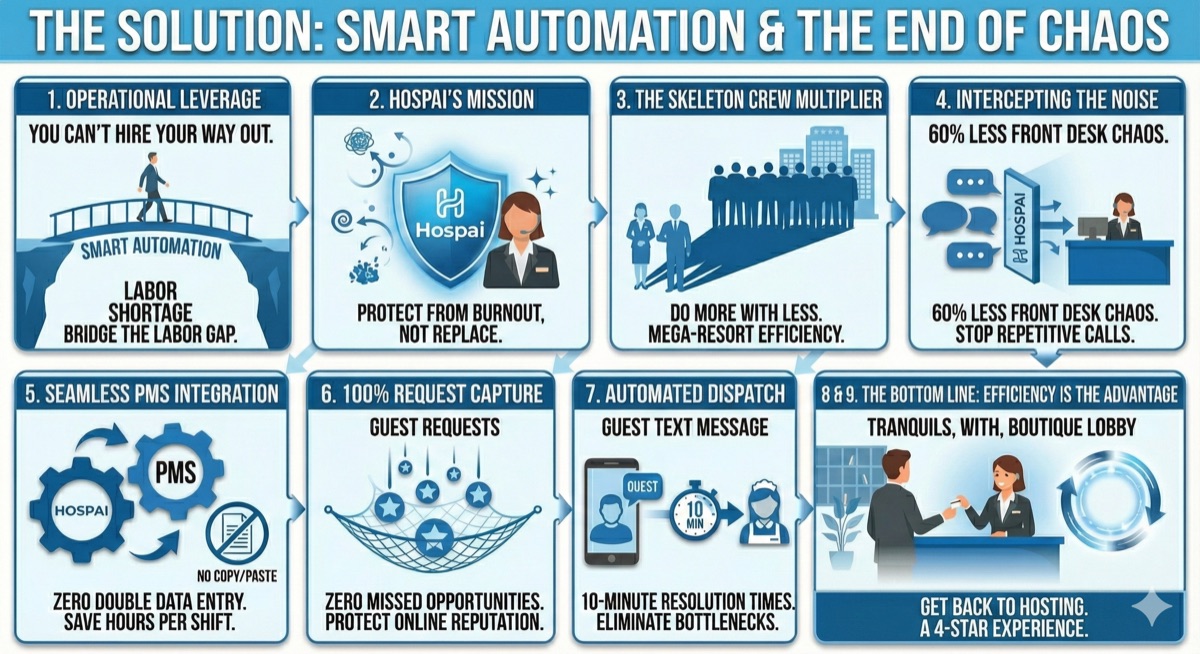
You cannot simply hire your way out of a labor shortage when the candidate pool has dried up. Boutique hotels and independent operators must rely on operational leverage to survive.
This is where Hospai fundamentally changes the operational equation. The goal of our automation is not to replace the hospitality professional; it is to protect them from the burnout that drives them to quit in the first place.
By eliminating repetitive busywork, Hospai allows a skeleton crew to operate with the efficiency of a fully staffed mega-resort. Here is exactly how the numbers break down:
1. Intercepting the Noise (60% Less Front Desk Chaos)
The vast majority of calls to the front desk are routine, repetitive inquiries—pool hours, Wi-Fi passwords, and late checkout requests. Hospai intercepts these standard questions automatically before the phone ever rings. This immediately reduces front desk chaos by 60%, allowing a lean team to manage the physical lobby without being constantly interrupted by a ringing phone.
2. Seamless PMS Integration (Zero Double Data Entry)
A major driver of staff frustration is fighting with clunky, disconnected technology. Because Hospai connects directly to your existing Property Management System (PMS), everything syncs automatically in the background. Staff do not have to copy and paste data between screens, saving hours of tedious administrative labor every single shift.
3. 100% Request Capture (Zero Missed Opportunities)
When a lean front desk team is swamped with a line of physical check-ins, phone calls inevitably get missed, and guest requests slip through the cracks. Hospai captures and routes 100% of guest inquiries digitally. Even during peak rush hours, the system ensures zero missed requests, protecting your online reputation from negative reviews.
4. 10-Minute Resolution Times (Automated Dispatch)
By automating the dispatch of operational tasks, the system removes the front desk as the bottleneck. If a guest texts a request for extra towels, Hospai routes it directly to the available housekeeper. This hyper-efficiency consistently drives guest request resolution times down to 10 minutes or less, a metric that directly correlates with higher post-stay review scores.
The Bottom Line
Providing a boutique, highly personalized guest experience is impossible when your staff is drowning in operational chaos.
By implementing smart automation, operators do more than just eliminate thousands of dollars in annual turnover costs. You give your front desk the breathing room they need to stop acting like a human FAQ page and get back to actually hosting guests. In a market where labor is scarce, efficiency is the only competitive advantage that matters.